
The Healing Power of Freshwater Aquariums in Nursing Homes and Senior Living Communities
How freshwater aquariums can enhance quality of life, support memory care, encourage social interaction, and create a more peaceful environment for seniors.
thefishgallery.com/nursing-home-aquariums/
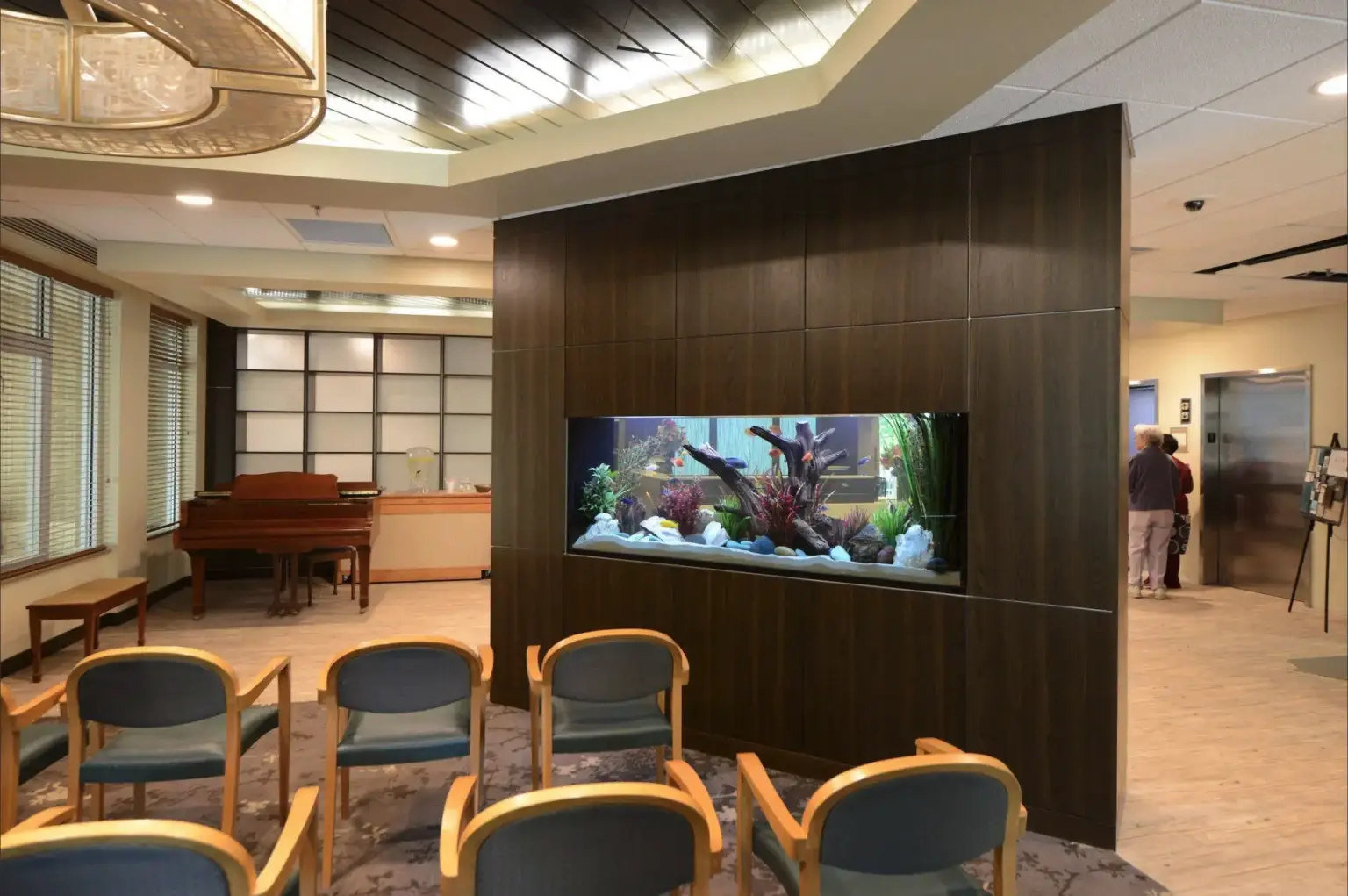
When we think about improving the quality of life for seniors living in nursing homes, assisted living communities, and memory care facilities, we often focus on medical care, social activities, nutrition, and physical comfort. But what if something as simple as watching colorful tropical fish swimming through a beautiful freshwater aquarium could make a meaningful difference?
At Fish Gallery, we believe an aquarium is much more than a decorative feature. A thoughtfully designed freshwater aquarium can bring nature indoors, create opportunities for connection, and add a sense of tranquility and wonder to an environment that residents call home.
For senior living communities looking for innovative ways to enhance resident experiences, freshwater aquariums deserve serious consideration.
1. Freshwater Aquariums Can Help Create a Calm, Relaxing Environment
Life in a nursing home or assisted living facility can involve significant adjustments. Residents may experience changes in their routines, living arrangements, independence, and social connections.
A freshwater aquarium introduces a peaceful natural element into everyday surroundings.
The gentle movement of tropical fish, softly illuminated aquatic plants, and visually engaging underwater landscapes can provide a relaxing focal point.
Unlike a television, an aquarium offers natural movement without loud sounds, rapid scene changes, or overwhelming stimulation.
For residents, spending a few quiet minutes observing fish may offer:
- A calming break from a busy daily routine.
- A pleasant distraction from everyday worries.
- A peaceful setting for reflection and relaxation.
- A connection to the natural world without leaving the building.
- An enjoyable activity that requires little physical effort.
Although research specifically demonstrating reductions in anxiety or stress among nursing home residents is limited, aquariums can contribute to a welcoming, nature-inspired environment that encourages quiet enjoyment.
An aquarium doesn't require residents to do anything. It simply invites them to enjoy the moment.
2. Research Suggests Aquariums May Improve Eating Habits in Residents With Dementia
One of the most compelling reasons to consider aquariums in senior living communities comes from research involving residents with Alzheimer's disease and dementia.
A study published in the Western Journal of Nursing Research by researchers Nancy Edwards and Alan Beck examined how introducing aquariums affected individuals with Alzheimer's disease.
The researchers studied 62 residents living in specialized care units.
After aquariums were introduced, researchers observed significant improvements in nutritional intake.
The study reported:
- A 21.1% increase in nutritional intake after the aquariums were introduced.
- An average weight increase of 1.65 pounds during the 16-week observation period.
- Reduced reliance on nutritional supplementation among participants.
Source: Edwards & Beck (2002), Western Journal of Nursing Research 24(6), 697–712 · Abstract on PubMed
A later study involving 70 residents with dementia across three extended-care facilities also found improvements in food intake and average body weight after aquariums were added to common dining areas.
Source: Edwards & Beck (2013), Alzheimer Disease & Associated Disorders 27(4), 379–383 · Abstract on PubMed
These findings are especially interesting because maintaining adequate nutrition can be challenging for residents experiencing cognitive decline.
While these studies do not prove that every aquarium will produce the same results, they suggest that the surrounding environment may play an important role in supporting more positive mealtime experiences.
For nursing homes and memory care facilities, aquarium design may be more than an aesthetic decision. It could be part of creating an environment that supports resident well-being.
3. Aquariums Provide Gentle Mental Stimulation for Seniors
Mental engagement remains an important part of quality of life as people age.
Freshwater aquariums offer an ever-changing environment filled with movement, color, and natural behaviors that residents can enjoy at their own pace.
A school of colorful tetras moving together, an angelfish gliding through the plants, or a small group of fish exploring their environment can create countless moments of interest throughout the day.
Residents may enjoy observing:
- The colors and patterns of different tropical fish.
- Fish interacting with one another.
- Natural aquatic plants moving gently in the water.
- Changes in lighting and activity throughout the day.
- The individual behaviors and personalities of familiar fish.
For residents with limited mobility, an aquarium provides a form of visual engagement that does not require leaving their chair or participating in a structured activity.
For those living with dementia, familiar aquarium features may also become part of a comforting daily routine.
Aquariums should not be considered a treatment for dementia or cognitive decline, but they can provide accessible opportunities for observation, curiosity, and enjoyment.
4. Freshwater Aquariums Encourage Social Interaction and Conversation
One of the greatest challenges facing many senior living communities is helping residents maintain meaningful social connections.
An aquarium can become a natural gathering point.
Imagine several residents sitting together in a common lounge, watching a beautiful freshwater aquarium.
One resident notices a brightly colored fish. Another remembers keeping an aquarium years ago. Someone else asks about the plants or wonders what the fish are doing.
Suddenly, a simple decorative feature has created an opportunity for conversation.
Aquariums can help provide common ground for:
- Conversations between residents.
- Interactions between residents and caregivers.
- Activities involving grandchildren and visiting family members.
- Group discussions about nature, wildlife, and aquatic life.
- Shared interests between residents who might otherwise have little in common.
For residents who once enjoyed keeping fish or spending time outdoors, aquariums may also bring back personal memories and stories.
These interactions may seem small, but everyday moments of connection help make a senior living community feel more like home.
5. Aquariums Can Enrich Memory Care Environments
Memory care communities face unique challenges when creating environments that are both engaging and comfortable for residents living with Alzheimer's disease or other forms of dementia.
A carefully designed freshwater aquarium offers a passive activity that residents can enjoy without needing complex instructions.
Unlike games or scheduled activities, watching fish does not require remembering rules, following multiple steps, or maintaining concentration for long periods.
Residents can approach the experience on their own terms.
A well-designed aquarium may provide a familiar visual landmark, a pleasant point of interest, or a source of gentle engagement during quiet periods.
For memory care environments, we recommend thoughtful aquarium designs featuring:
- Peaceful, easy-to-follow fish movement.
- Colorful but visually balanced tropical fish.
- Natural decorations and healthy aquatic plants.
- Gentle, consistent lighting.
- Quiet filtration systems.
- Comfortable seating positioned for easy viewing.
The goal is not to create an overwhelming display. It is to introduce a beautiful, natural environment that residents can enjoy comfortably.
6. Aquariums Can Make Visits More Enjoyable for Families and Grandchildren
Family visits are an essential part of life in nursing homes and assisted living communities.
However, finding engaging activities for multigenerational visits is not always easy.
A freshwater aquarium gives families something enjoyable to experience together.
Grandchildren may be fascinated by brightly colored fish. Adult children might enjoy discussing the aquarium with their parents. Residents may look forward to showing visitors their favorite fish.
An aquarium can become a familiar part of family visits and a source of shared enjoyment.
Instead of simply sitting together in a common area, families have a beautiful living display that encourages observation and conversation.
For residents with limited mobility, this type of experience can be particularly valuable.
7. Freshwater Aquariums Bring Nature Indoors
Access to outdoor environments can be limited for some nursing home residents because of mobility challenges, medical needs, or weather conditions.
Freshwater aquariums provide one way to bring elements of the natural world inside.
Beautiful aquatic plants, natural stones, driftwood, and living tropical fish can transform an ordinary room into an inviting environment inspired by nature.
Modern aquariums can be incorporated into:
- Main entrance lobbies and reception areas.
- Resident lounges and gathering spaces.
- Activity and recreation rooms.
- Family visitation areas.
- Designated relaxation spaces.
- Approved common areas in memory care communities.
The aquarium should be positioned to support safe viewing and comply with facility infection-prevention requirements.
When thoughtfully incorporated into the interior design, an aquarium can become an architectural centerpiece that residents, families, and staff enjoy.
8. Aquariums Can Create Opportunities for Educational Activities
Freshwater aquariums also offer opportunities for creative resident programming.
Activity directors can incorporate the aquarium into educational sessions, group conversations, and recreational activities.
For example, a community might introduce a weekly "Fish of the Week" program.
Residents could learn about a particular tropical fish species, discuss its colors and behavior, or help choose a name for a new aquarium inhabitant.
Other opportunities include aquatic-themed arts and crafts, fish identification activities, nature discussions, and supervised observation sessions.
These programs can be adapted to different levels of mobility, interest, and cognitive ability.
The objective isn't necessarily to teach residents how to maintain an aquarium. It's to use the aquarium as a resource for enjoyable, meaningful engagement.
9. A Beautiful Aquarium Can Enhance the Overall Senior Living Experience
First impressions matter when families visit a senior living community.
The surroundings communicate a great deal about the atmosphere, character, and attention to detail within a facility.
A beautifully maintained freshwater aquarium can immediately make a lobby or common area feel more welcoming.
It adds movement, color, natural beauty, and a distinctive focal point.
For facility administrators, an aquarium can become an attractive feature that helps create a memorable visitor experience.
But its greatest value extends beyond appearance.
A freshwater aquarium is a living feature that changes throughout the day, giving residents something beautiful to enjoy repeatedly.
10. Professional Aquarium Maintenance Makes the Experience Easier
One of the most common concerns nursing home administrators have about installing an aquarium is maintenance.
Who will feed the fish? Who will clean the aquarium? What happens if equipment stops working?
Fortunately, professionally designed freshwater aquariums can be supported by a scheduled maintenance program.
At Fish Gallery, our aquarium design, installation, and maintenance services can help facilities plan a system that fits their space, budget, and ongoing operational needs.
Services may include:
- Custom aquarium design and installation.
- Selection of appropriate freshwater fish and aquatic plants.
- Professional filtration and lighting systems.
- Routine aquarium cleaning and water changes.
- Water-quality testing and fish health monitoring.
- Equipment inspections and maintenance.
- Ongoing aquarium care and support.
For healthcare and long-term care settings, the facility must also establish appropriate infection-control policies. The CDC recommends avoiding fish tanks in patient-care areas and restricting their placement in certain healthcare spaces, including dining areas. Regular cleaning should be handled by designated personnel who are not responsible for patient care, with precautions to prevent contact with aquarium water.
Professional maintenance can reduce the operational demands placed on facility staff, but does not replace these important safety procedures.
Source: CDC, Guidelines for Environmental Infection Control in Health-Care Facilities · Read the recommendation on cdc.gov
Why Freshwater Aquariums Are an Excellent Choice for Senior Living Communities
Freshwater aquariums offer several practical advantages for senior living environments.
They can feature colorful fish, lush aquatic plants, natural-looking decorations, and visually engaging designs without the complexity associated with many marine aquarium systems.
Freshwater aquariums can also be customized to match a facility's interior design.
From a peaceful planted aquarium in a resident lounge to a large architectural aquarium in the main lobby, there are options for a wide range of spaces.
The ideal system combines visual beauty, appropriate fish selection, reliable equipment, professional care, and thoughtful placement.
Let Fish Gallery Help Bring the Benefits of Freshwater Aquariums to Your Community
At Fish Gallery, we believe beautiful aquariums have the power to create meaningful experiences.
For nursing homes, assisted living communities, and memory care facilities, a freshwater aquarium offers more than an attractive addition to the décor.
It can become a gathering place, a conversation starter, a connection to nature, and a source of daily enjoyment.
Research also suggests that carefully placed aquariums may support improved mealtime experiences for some residents living with dementia, although further research is needed.
Whether your facility is considering its first aquarium or wants to upgrade an existing installation, Fish Gallery can help create an aquatic environment designed around your community's needs.
Bring a little more life, color, and tranquility into the lives of those who deserve it most.
Contact Fish Gallery Today
Interested in adding a professionally designed freshwater aquarium to your nursing home, assisted living community, or memory care facility?
Fish Gallery specializes in custom aquarium design, installation, and professional aquarium maintenance.
Contact our team to discuss how a freshwater aquarium can enhance your facility and create memorable experiences for residents and their families.
thefishgallery.com/contact/
Our design team will review your request and contact you to discuss the next steps.
Fish Gallery — Bringing the Beauty of Aquatic Life Into Everyday Spaces.
Nursing Home Aquarium Questions
Can aquariums improve eating habits for nursing home residents with dementia?
A study published in the Western Journal of Nursing Research by researchers Nancy Edwards and Alan Beck examined how introducing aquariums affected individuals with Alzheimer's disease.
After aquariums were introduced, researchers observed significant improvements in nutritional intake.
Research also suggests that carefully placed aquariums may support improved mealtime experiences for some residents living with dementia, although further research is needed.
Is an aquarium a treatment for dementia?
Aquariums should not be considered a treatment for dementia or cognitive decline, but they can provide accessible opportunities for observation, curiosity, and enjoyment.
Aquariums are environmental enhancements, not medical treatments.
Where can an aquarium go in a nursing home, and what does the CDC recommend?
Modern aquariums can be incorporated into:
- Main entrance lobbies and reception areas.
- Resident lounges and gathering spaces.
- Activity and recreation rooms.
- Family visitation areas.
- Designated relaxation spaces.
- Approved common areas in memory care communities.
The aquarium should be positioned to support safe viewing and comply with facility infection-prevention requirements.
The CDC recommends avoiding fish tanks in patient-care areas and restricting their placement in certain healthcare spaces, including dining areas.
Regular cleaning should be handled by designated personnel who are not responsible for patient care, with precautions to prevent contact with aquarium water.
Who takes care of an aquarium in a nursing home or senior living facility?
At Fish Gallery, our aquarium design, installation, and maintenance services can help facilities plan a system that fits their space, budget, and ongoing operational needs.
Services may include:
- Custom aquarium design and installation.
- Selection of appropriate freshwater fish and aquatic plants.
- Professional filtration and lighting systems.
- Routine aquarium cleaning and water changes.
- Water-quality testing and fish health monitoring.
- Equipment inspections and maintenance.
- Ongoing aquarium care and support.
For healthcare and long-term care settings, the facility must also establish appropriate infection-control policies.
Professional maintenance can reduce the operational demands placed on facility staff, but does not replace these important safety procedures.
What activities can a nursing home or assisted living community run with an aquarium?
Activity directors can incorporate the aquarium into educational sessions, group conversations, and recreational activities.
For example, a community might introduce a weekly "Fish of the Week" program.
Residents could learn about a particular tropical fish species, discuss its colors and behavior, or help choose a name for a new aquarium inhabitant.
Other opportunities include aquatic-themed arts and crafts, fish identification activities, nature discussions, and supervised observation sessions.
These programs can be adapted to different levels of mobility, interest, and cognitive ability.
Research and References
- Edwards, N. E., & Beck, A. M. (2002). Animal-Assisted Therapy and Nutrition in Alzheimer's Disease. Western Journal of Nursing Research, 24(6), 697–712. https://pubmed.ncbi.nlm.nih.gov/12365769/
- Edwards, N. E., & Beck, A. M. (2013). The Influence of Aquariums on Weight in Individuals With Dementia. Alzheimer Disease & Associated Disorders, 27(4), 379–383. https://pubmed.ncbi.nlm.nih.gov/23138175/
- Centers for Disease Control and Prevention. Guidelines for Environmental Infection Control in Health-Care Facilities. https://www.cdc.gov/infection-control/hcp/environmental-control/recommendations.html
Note: Aquariums are environmental enhancements, not medical treatments. Each facility should assess resident safety, infection prevention, accessibility, and applicable regulations before installing an aquarium.